“We are Berlin”
Family event at FEZ Berlin

Location: FEZ Berlin

Date: 06.06.–07.06.2026

Occasion: “We are Berlin” family event

The San’at team was delighted to represent Uzbekistan at the “We are Berlin” family event held at FEZ Berlin. The event attracted great interest among Berlin residents and visitors to the city. We had the opportunity to present the rich culture, art and traditions of Uzbekistan through the following programme elements:

  • Children’s art exhibition “The World Through Children’s Eyes”. As a continuation of the exhibition for International Children’s Day, the creative works by children from Uzbekistan and Berlin were presented to an even wider audience.
  • Creative workshop “The Colourful Treasures of Uzbekistan”. In a format developed by the founder of the San’at Forum, children learned about the forms and meanings of traditional Uzbek ornaments and created their own compositions.
  • Flower wreath workshop. One of our organisation’s most popular highlights: together with a master craftswoman, participants made their own flower wreaths and took them home as a souvenir.
  • Reading corner. A cosy reading corner was set up for visitors. It also hosted the presentation of the bilingual German-Uzbek book by Uzbek author Sitora Usmonova, as well as a reading with the author.
  • Somsa masterclass. Together with the children, the entire process was experienced, from kneading the dough to baking and tasting the finished pastries.
  • As part of a dance programme prepared by us, Uzbek national dances were performed by Uzbek children living in Berlin.
Creative workshop “The Colourful Treasures of Uzbekistan”
Children experience traditional Uzbek ornaments in our workshop
Our bilingual (Uzbek-German) reading corner
Zukhra Rakhmatova and children after our traditional dance performance

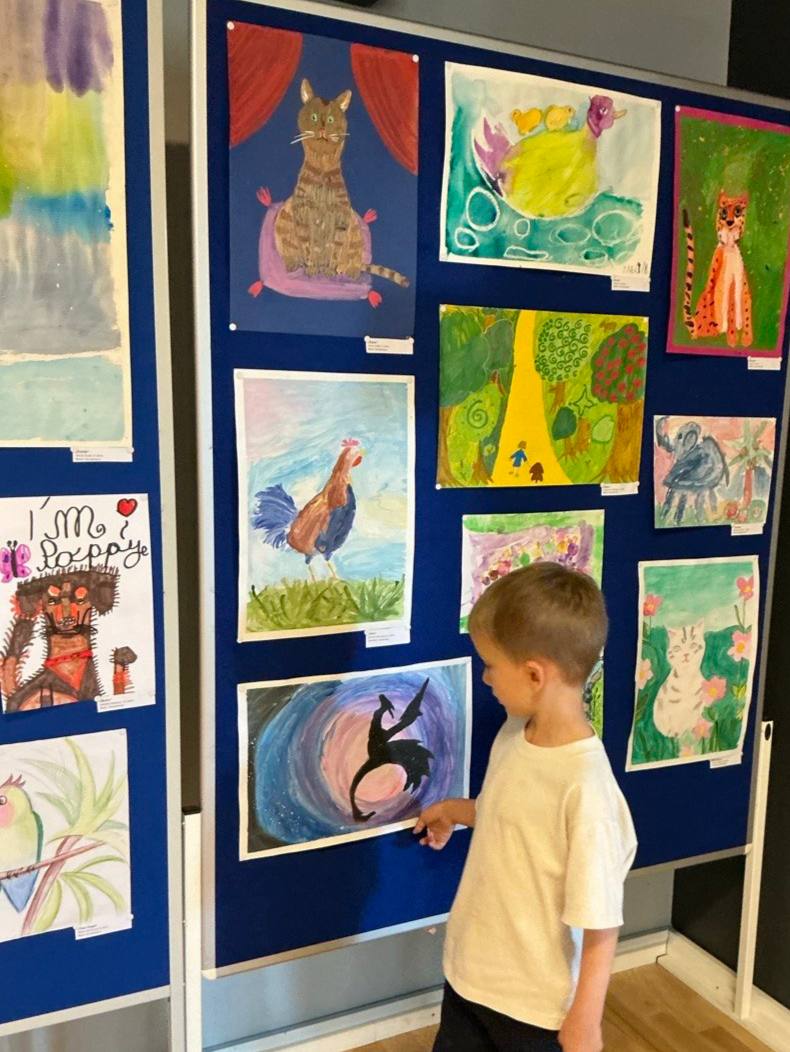
“The World Through Children’s Eyes”
International children’s art exhibition for International Children’s Day in Berlin

Location: Emser Str. 12–13, Berlin

Date: 31.05.2026–04.06.2026

Occasion: International Children’s Day

Exhibition curator: Zukhra Rakhmatova

Organiser: San’at – Forum für Kunst, Kultur und Wissenschaft e.V.

Participants

  • Embassy of the Republic of Uzbekistan in the Federal Republic of Germany
  • Azerbaijani Cultural Centre Khari Bülbül e.V.
  • Rhythm Dance Group
  • Art Space Berlin Art School
  • Primo Piano Berlin Music and Art School
  • Logenhaus GmbH
  • MEcoVEA e.V.

On the occasion of International Children’s Day, we presented the international children’s art exhibition “The World Through Children’s Eyes”. The exhibition brings together children from Germany and Uzbekistan and creates a space for encounter, creativity and cultural exchange.

Around 250 works of art by children aged three to thirteen, including more than 50 works from Uzbekistan, are presented as part of the exhibition. The works reveal the thoughts, feelings, hopes and dreams of a young generation and invite visitors to see the world from a different perspective: through the eyes of children.

The world as seen by children

The exhibition focuses not on perfection or artistic professionalism, but on children’s authentic view of their environment. The works on display were created by children with very different experiences and backgrounds. Some attend art schools or creative education programmes, while others paint at home with their families or discover their creativity independently of formal artistic training.

It is precisely this diversity that gives the exhibition its special value. Each picture tells its own story and reflects a child’s individual perception. The works differ in technique, style and artistic level, yet they share one defining quality: they are expressions of children’s genuine thoughts, feelings and ideas.

The exhibition understands children’s art not as a competition, but as a form of dialogue. Each work is regarded as an equally valuable contribution that shows how children see, experience and wish to shape the world.

Art as a bridge between Germany and Uzbekistan

The exhibition promotes cultural exchange between Germany and Uzbekistan and highlights the unifying power of art. It shows that creativity can overcome cultural, linguistic and geographical boundaries. The works on display make visible that, regardless of origin, language or culture, children share similar values: friendship, family, peace, respect and the need for harmonious coexistence.

In this way, the exhibition contributes to cultural education, promotes tolerance and mutual understanding, and strengthens friendly relations between the two countries.

Project objectives

  • The exhibition pursues the following objectives in particular:
  • Promoting children’s creative development;
  • Making children’s perspectives and forms of expression visible;
  • Supporting cultural exchange between Germany and Uzbekistan;
  • Promoting openness, respect and intercultural dialogue;
  • Strengthening cultural education and children’s participation in society;

Cultural accompanying programme

In addition to the exhibition, visitors can experience a diverse cultural programme featuring traditional Uzbek and Azerbaijani dance performances by San’at Forum and Rhythm Dance Group, creative workshops and participatory activities for children and families. In the workshops, participants can make flower wreaths, children can paint, work with clay and become acquainted with various creative techniques. All works created may be taken home as a personal souvenir.

Traditional Uzbek dishes and cultural presentations also offer insights into the culture, history and hospitality of Uzbekistan.

Participants

The exhibited works come from children in Berlin, from kindergartens, art and educational institutions, and from pupils of state educational institutions in Uzbekistan, including children from Tashkent and the P. Benkov Republican Art College.

Children’s artworks are presented, among others, by:

  • Azerbaijani Cultural Centre Khari Bülbül e.V.
  • Art Space Berlin Art School
  • Primo Piano Berlin Music and Art School

In addition, numerous children of different nationalities and cultural backgrounds from various Berlin districts and from Uzbekistan are taking part.

H.E. Mr Dilshod Akhatov, Ambassador of the Republic of Uzbekistan to Germany, is expected to attend the ceremonial opening.

The exhibition is guided by the idea of cultural exchange and international understanding. It impressively demonstrates that art can build bridges between people and cultures.

The exhibition is realised with the kind support of Logenhaus Berlin GmbH. Special thanks go to Mr Andrej Rein, Managing Director of Logenhaus Berlin GmbH, for providing the premises and supporting this international cultural project.

In addition, the organisers thank all partner organisations, educational institutions, families, volunteers, our young San’at Forum team and the many supporters who contributed to the successful realisation of the exhibition.

Further information

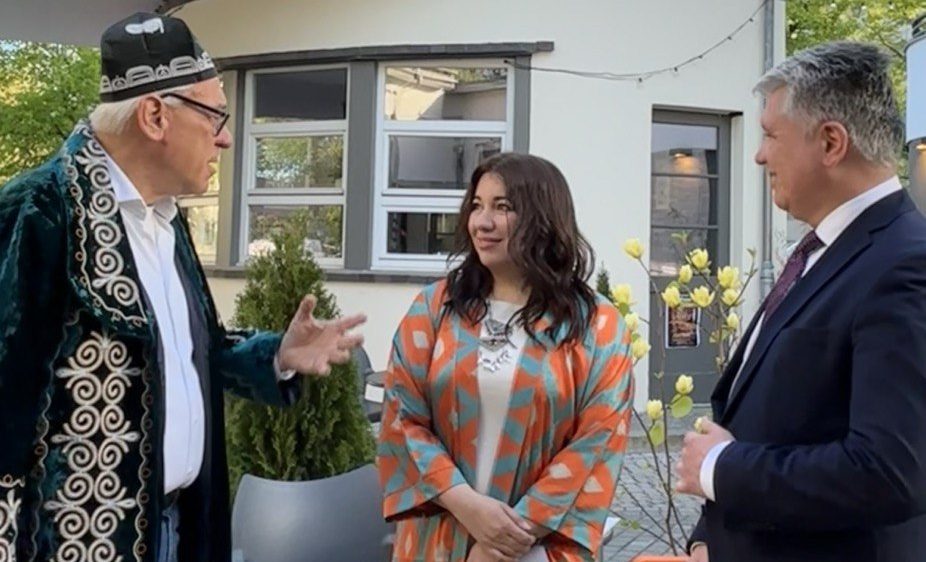
Fascination Central Asia – Uzbekistan

Location: Schell Bistro, Berlin

Date: 28.04.2026

Occasion: Lecture evening “Fascination Central Asia – Uzbekistan”

Initiator and speaker: Christian Grosse, Central Asia expert

Guest: H.E. Dilshod Akhatov, Ambassador of the Republic of Uzbekistan

Cultural contribution: San’at – Forum für Kunst, Kultur und Wissenschaft e.V.

Project description:
The lecture evening “Fascination Central Asia – Uzbekistan” provided an impressive setting in which to present Uzbekistan as a land of the Silk Road, historic cities, rich artistic traditions and cultural diversity. The focus was on the history, architecture, landscapes and social traditions of Uzbekistan – from madrasas, mausoleums and mosques to the country’s hospitality and culinary diversity.

San’at – Forum for Art, Culture and Science e.V. supported the initiative of Central Asia expert Christian Grosse with a cultural contribution. Traditional Uzbek dances and artistic elements expanded the lecture into a vivid cultural experience, creating an evening that combined knowledge, encounter and sensory experience.

The event brought together guests from culture, society, sport and politics as well as friends of Uzbekistan and Central Asia. In this setting, cultural exchange was not only addressed as a theme, but made directly tangible through conversations, shared impressions and encounters with Uzbek tradition.

For our association, participating in this evening was an important contribution to the international visibility of Uzbekistan’s cultural heritage. San’at understands culture as a bridge between people, countries and institutions. The evening showed how lectures, personal encounters and artistic contributions can together create a space for dialogue and understanding.

Objective:
Promoting cultural dialogue between Germany and Uzbekistan, making Uzbek traditions visible and strengthening personal encounters as the basis for sustainable cultural cooperation.

Further information

Navro’z in Berlin: How a Spring Festival Became a Cultural Bridge

Location: Humboldt Forum in the Berlin Palace

Date: 21.03.2026

Occasion: “Nouruz, Newroz, Nauroz” festival

Festival co-curator / curator of the Uzbek section: Zukhra Rakhmatova

Artists: Dilfuza Qobilova with the Milliy Meros ensemble of the State Philharmonic of Uzbekistan, dance master Malika Khaidarova, and others

Project description:

With around 9,000 visitors, the Navro’z festival at the Humboldt Forum became one of the year’s major cultural highlights. It created an experiential cultural space – a day that showed how international cooperation can be lived in concrete form.  Berlin, already a city of diversity, gained a tangible new experience on this day. As a central contributor, we brought the culture of Uzbekistan to the stage of the Humboldt Forum. The project took place under the direction of the Humboldt Forum together with six other Berlin cultural associations, which presented cultural aspects of Navro’z from additional countries.

Navro’z – Experiencing Cultural Heritage

Navro’z is the New Year and spring festival celebrated by more than 300 million people along the Silk Road. It is part of UNESCO’s intangible cultural heritage and, for more than 3,000 years, has marked renewal and the spring equinox – the moment when nature and community awaken alike. At the Humboldt Forum, cultures from Central Asia, Iran, Afghanistan and Kurdish regions came together and presented their perspectives on this shared heritage. Navro’z was made tangible: through music, movement and encounter.

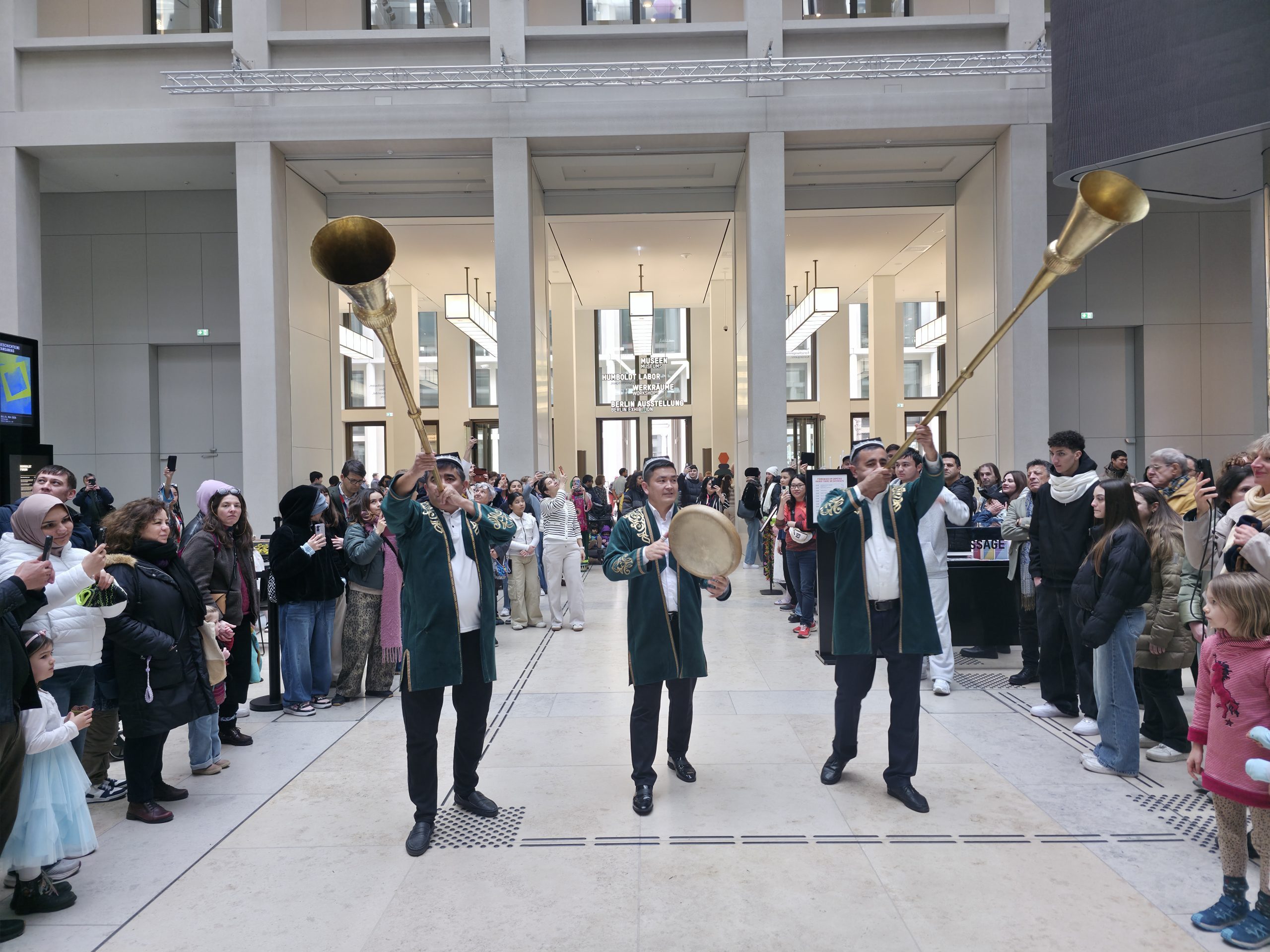
The opening set a clear tone: the powerful sounds of karnay and surnay opened the space – acoustically and atmospherically.

Karnay and surnay opened the space as an acoustic highlight

Highlights of our programme

On stage, traditional dances, singing and musical virtuosity came together to form a multifaceted image of Uzbek culture. Renowned artists such as dance master Malika Khaidarova and singer Dilfuza Qobilova stood not only for artistic excellence, but also for living tradition.

During the concert by singer Dilfuza Qobilova with her ensemble “Milliy Meros” of the State Philharmonic of Uzbekistan traditional Uzbek folk music for Navro’z was performed live. All performing artists are members of OÊ»zbekiston Davlat Filarmoniyasi (the State Philharmonic of the Republic of Uzbekistan), the country’s central state concert institution. They regularly represent Uzbekistan at official state events and international cultural festivals.

Performance by the Milliy Meros ensemble under the direction of Dilfuza Qobilova

Uzbek musical tradition is shaped by centuries-old courtly and folk currents. Instruments such as karnay and surnay are closely associated with public celebrations, while maqom singing is among the most demanding forms of classical music in Central Asia. The concert therefore offered not only musical performances, but also an encounter with cultural identity, historical continuity and contemporary interpretations of traditional art forms. The audience had the opportunity to experience the musical dimension of Uzbekistan’s cultural heritage and to listen not only to the singing, but also to the sounds of traditional instruments such as karnay, surnay and doira.

Another clear highlight was the dance workshop with Malika Khaidarova – lecturer and master of ethno-dance. In the workshop, participants were able to experience for themselves the magic of traditional Uzbek dances and thus encounter part of the Uzbek traditions associated with Navro’z. The Fergana style, traditionally danced by women and girls, was at the centre of this workshop. The soft elegance and inner presence of this dance represent a dignified, powerful and refined form of femininity. In addition to the fundamentals of the traditional Fergana style, participants also gained insight into the traditional musical structure and contemporary interpretations of Uzbek dance.

The atmosphere of the spring festival was further enriched by extensive musical, playful and dance contributions relating to Uzbek Navro’z traditions on the foyer stage.

Yet the experience of Uzbek traditions extended beyond the stage programme: children made kites, girls braided hair, and families created flower wreaths. 

In addition, there was an extensive workshop programme for families. The “40 braids” workshop (qirq kokil) conveyed a traditional Uzbek hair-braiding art with deep-rooted symbolic meaning. Braiding numerous fine plaits while incorporating a special braid ribbon, the “jamalak”, has been practised in Uzbekistan for centuries. It is regarded as an expression of beauty, femininity and cultural identity. Braiding was also a social act: mothers, grandmothers and daughters came together in this practice. Knowledge was passed on across generations, connected with care, warmth and familial closeness. The shared preparation strengthened family cohesion and reinforced cultural values.

We also presented an intercultural family workshop for making traditional Uzbek kites – the varrak. Especially at Navro’z, kite-flying becomes a ritual across generations: children design their kites independently or together with parents and grandparents. Regardless of age or social background, a communal moment emerges that connects people and celebrates the awakening of nature.

In another family workshop, flower wreaths known as “Gulchambar” were woven, a living communal tradition. The weaving of such wreaths from various flowers symbolises the awakening of nature and the joy of the coming spring.

The programme was accompanied by culinary offerings and a bazaar. Alongside the highlights of tangible Navro’z culture, the scent of plov and freshly baked samsa invited visitors to taste traditional dishes. A bazaar made carefully selected traditional crafts visible, tangible and available for visitors to purchase.

Here, culture was appropriated, tried out and passed on. These contributions were part of a curated overall programme that San’at e.V. had conceived in advance. The internal planning shows how deliberately individual elements – music, dance, workshops and audiovisual content – were interwoven to create a holistic experience.

Cultural Bridge-Builders and a Model for the Future

What made this day special was not only the individual programme elements, but the way they were presented as lived practice within the space. Conversations arose naturally – between generations, cultures and backgrounds. Children explained to their parents what they had just learned, and visitors stayed longer than planned because new perspectives kept opening up. The festival became a social space: open, permeable and inviting. It was a moment in which an audience became participants.

At the centre of this development were our association and our founder Zukhra Rakhmatova as the curator of a cultural dialogue. Her approach is to present culture not in isolation, but as a connecting element – between countries, institutions and people. In cooperation with the Humboldt Forum and six other associations, a format emerged that points beyond the single day.

What remains is more than the memory of a well-attended day. The Navro’z festival shows the potential of formats that do not merely present, but involve. At a time when cultural exchange often remains abstract, this model offers a concrete answer: encounter arises where people actively participate. Perhaps this is precisely the deeper significance of the day – a quiet indication of what cultural dialogue in European cities could look like in the future.

The San’at team at the Humboldt Forum

Further information

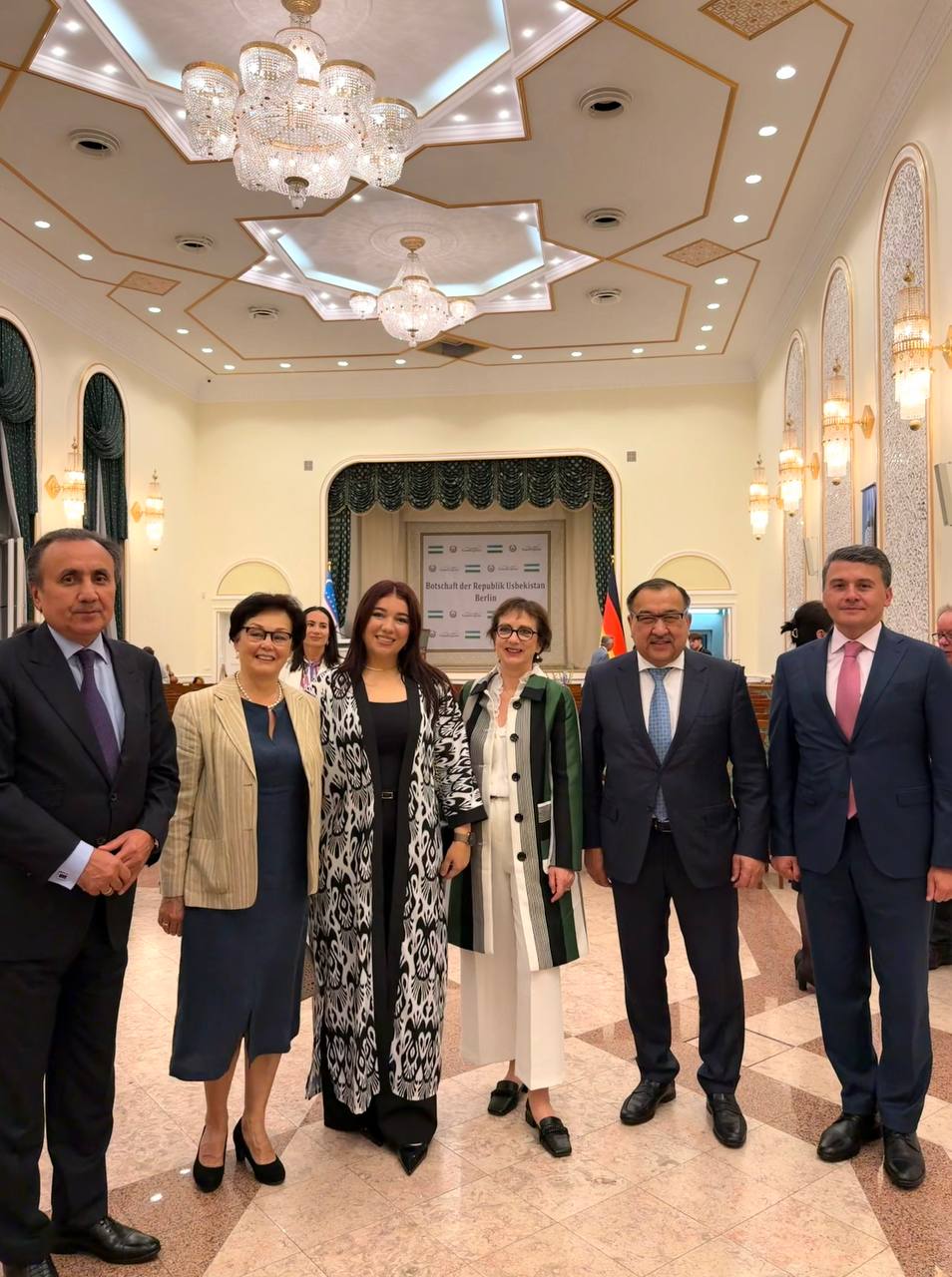
 Exhibition “A Legacy Across the Centuries – Uzbek Miniature Art”

Location: Embassy of the Republic of Uzbekistan in Berlin

Date: 18.02.2026

Occasion: 585th anniversary of Alisher Navoi and 543rd birthday of Zahiriddin Muhammad Bobur

Curator: Zukhra Rakhmatova

Artists: Avazbek Qodirov, Zilola Sulaymonova, Shohrux Butayev, Sabrina Jonibekova, Olim Omonov, Ibrat Fayzullaev

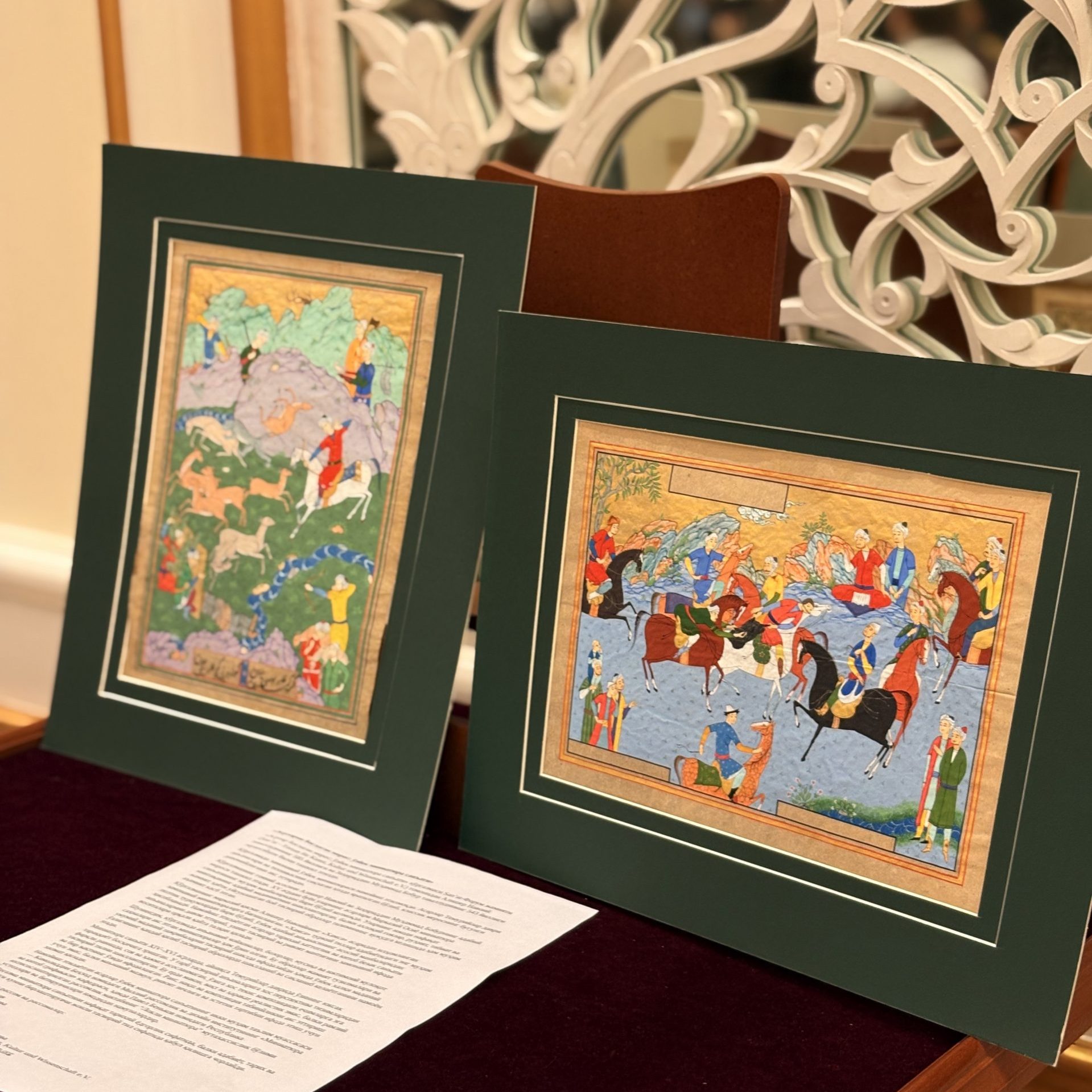
The exhibition “A Legacy Across the Centuries – Uzbek Miniature Art” by San’at – Forum for Art, Culture and Science e.V., held on the occasion of the 585th anniversary of Alisher Navoi and the 543rd birthday of Zahiriddin Muhammad Bobur, presents contemporary positions in miniature painting from Uzbekistan and examines their roots in Central Asia’s centuries-old visual and literary tradition. At its centre is the question of how a classical art form redefines itself in the field of tension between historical transmission and contemporary artistic practice.

The starting point of the exhibition is the literary legacy of Alisher Navoi and Zahiriddin Muhammad Babur, whose works have been among the most important sources of miniature painting in Central Asia since the 15th century. Their poetry shaped not only the region’s literary culture, but also a rich visual language in which ethics, spirituality, nature and social life are interwoven.

A central part of the exhibition is devoted to contemporary miniatures inspired by scenes from the Khamsa of Navoi – one of the most important poetic cycles in the Turkic languages and thus a source of the Uzbek literary tradition. These works connect with the historical practice of calligraphy and carry its narrative visual logic into the present.

In addition, the exhibition shows miniatures depicting traditional teahouses, bazaars, music and social encounters. The motifs visualise social structures and collective spaces of experience. They make visible how the cultural identity of the Uzbek people is formed and preserved in images.

Contemporary miniature art from Uzbekistan

Zukhra Rakhmatova during her opening speech

Ambassador Dilshod Akhatov at the opening of the exhibition

Miniature painting flourished from the 14th to the 16th century, particularly during the Timurid period. It developed an independent visual language based on flat perspective without shadow or depth, beyond Western systems of perspective. Space, time and action do not appear illusionistically, but are organised simultaneously and symbolically. Colour, ornament and composition do not serve naturalistic representation, but convey spiritual content, narrative density and aesthetic order.

The works presented are by teachers and graduates of two central training institutions for Uzbek miniature art: the Department of Miniature and Book Graphics at the National Institute of Art and Design named after Kamoliddin Behzod, and the Republican Specialised Art School for Lacquer Miniature named after Pavel Benkov. The selection of artists illustrates the transmission of artistic principles across generations while also revealing individual contemporary voices within a shared tradition.

The exhibition invites visitors to discover miniature painting not only as a historical artefact, but also as a living visual language – an art form that brings literature, history and the present together in a condensed pictorial space.

First exhibition of rescued works by contemporary Uzbek artists

Location: Embassy of the Republic of Uzbekistan in Berlin

Date: 02.06.2025

Occasion: Women in Business & Society conference: Women entrepreneurs from Uzbekistan and Germany in dialogue

Curator: Zukhra Rakhmatova

Artists: Sharifa Sharafkhodjaeva, Diyor Razikov, Nuriddin Rasulov

Project description:

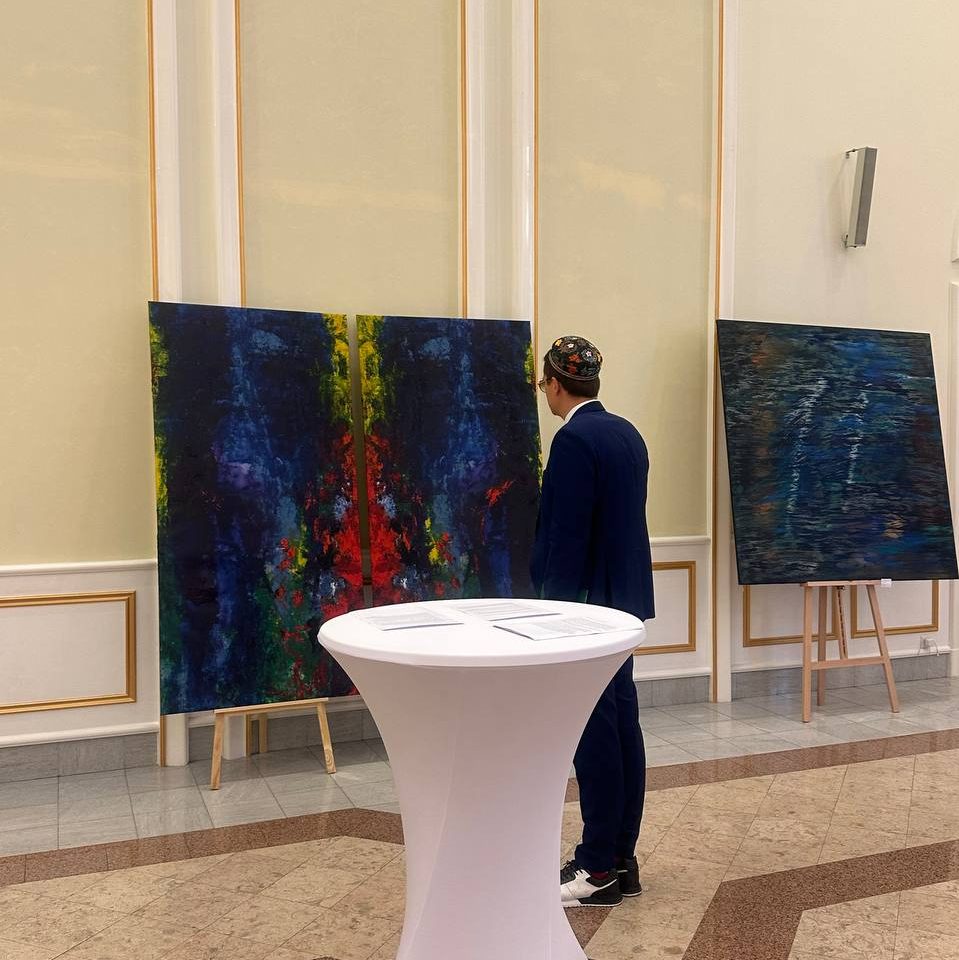
This exhibition was the starting point for the founding of the San’at Association – Forum for Art, Culture and Science. It featured rescued works by contemporary Uzbek artists that had been lost in Europe during the pandemic and were found and preserved by art historian and curator Zukhra Rakhmatova during a search lasting several weeks.

The presentation at the Embassy of the Republic of Uzbekistan in Berlin symbolised the ‘return of art to its homeland’ and marked the public launch of the association. The conference not only saw the opening of the exhibition, but also the official announcement of the founding of San’at.

As a cultural bridge between Germany and Uzbekistan, San’at played an active role in shaping the evening’s programme. In cooperation with the Primo Piano Music School, a musical contribution was integrated into the official programme, featuring selected classical compositions. The artistic framework enriched the conference and created a lively space for intercultural exchange between entrepreneurs, cultural professionals and guests from both countries. The event impressively demonstrated how art connects people and facilitates dialogue.

More Information:

Planned Projects

Our projects combine contemporary art, cultural heritage, education and intercultural dialogue between Uzbekistan and Germany. The following projects are currently in planning:

International children’s art exhibition for International Children’s Day (1 June)

For International Children’s Day, San’at is organising an international children’s art exhibition featuring works by children from Uzbekistan and Germany. Works from leading art schools in Uzbekistan as well as from young artists in Germany will be presented.

The exhibition creates a creative space for encounter, exchange and mutual acquaintance.

Objective: to promote cultural education, creativity and international understanding from childhood onward.

German-Uzbek Restoration and Knowledge Exchange Project with Dr Anke Scharrahs

Project description: San’at is planning an international restoration and knowledge exchange project in cooperation with the renowned German restorer Dr Anke Scharrahs. Dr Scharrahs is a globally recognised expert in the conservation and restoration of historic and polychrome wooden objects as well as art-historical interiors. She has more than 25 years of experience in researching and restoring significant cultural-historical objects, including international restoration projects such as the long-term restoration of the famous Aleppo Room at the Museum of Islamic Art in Berlin.

As part of this project, Dr Scharrahs is to be invited to Uzbekistan in order to initiate professional exchange with local museums, restorers and art institutions, offer workshops and lectures, and develop joint approaches to the preservation of cultural heritage.

Objective: to build sustainable cooperation in the field of restoration and cultural heritage preservation, to promote professional exchange of experience between Germany and Uzbekistan, and to strengthen cultural dialogue through shared knowledge and practical cooperation.

Anniversary Project “35 Years of Uzbekistan’s Independence”
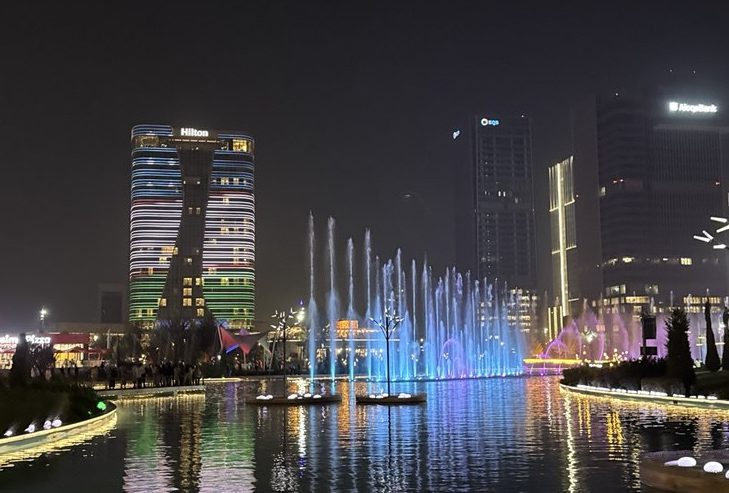
On the occasion of the 35th anniversary of the Republic of Uzbekistan’s independence, San’at is planning a cultural anniversary programme with exhibitions, concerts and lectures in Germany and Uzbekistan.

A special focus will be placed on miniature art relating to the “Baburnama” and on the cultural heritage of Amir Timur.

Objective: to increase the international visibility of Uzbekistan’s cultural heritage and promote cultural dialogue.

Project for the Day of the Uzbek Language

The project is dedicated to promoting the Uzbek language as part of cultural heritage. Readings, literary evenings and educational formats for a broad audience are planned.

Objective: to communicate linguistic diversity and promote intercultural education.